AI Cameras and Sensors: The Future of Construction Safety
Every 96 minutes, a construction worker dies from a work-related injury in the United States. Behind that sobering statistic lie thousands of families forever changed, projects delayed, and companies facing devastating consequences. Despite decades of safety protocols and training programs, construction remains one of the most dangerous industries in America, accounting for nearly one in five workplace fatalities.
But what if technology could see the danger before it strikes?
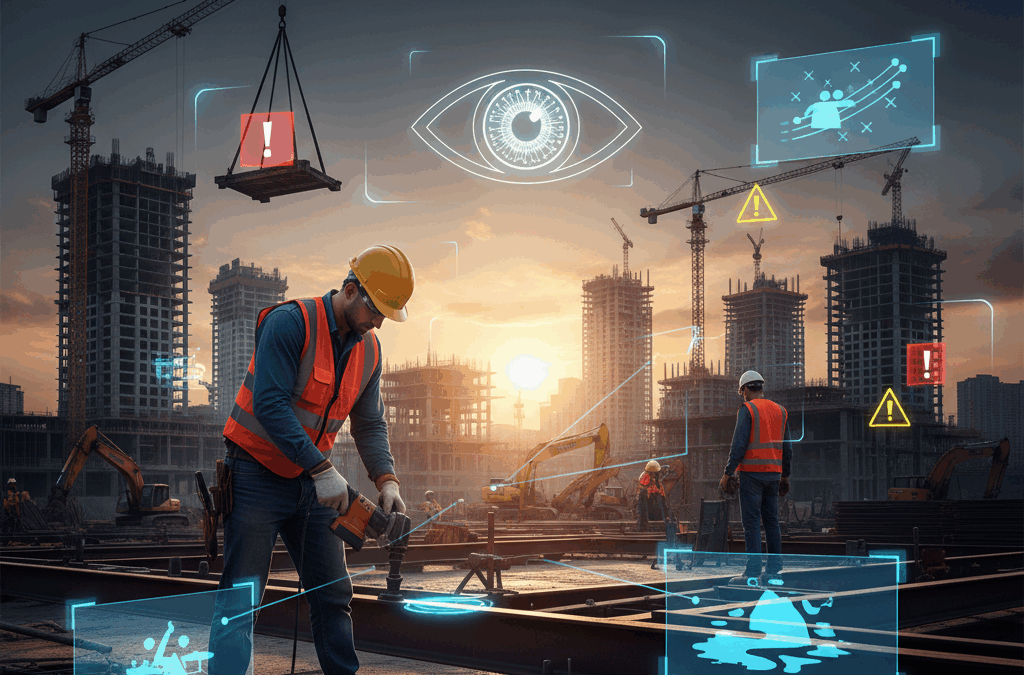
Enter AI-powered cameras and sensors: the game-changing innovation that's transforming construction sites from reactive danger zones into proactive safety havens. These intelligent systems don't just watch; they analyze, predict, and prevent accidents in real-time, giving safety managers superpowers they never knew were possible.
The Stark Reality of Construction Safety
The numbers tell a story that demands urgent action. In 2022 alone, 1,056 construction workers lost their lives on the job, an 11% increase from the previous year. The industry's "Fatal Four" hazards (falls, struck-by incidents, electrocutions, and caught-in/between accidents) account for 65% of all construction deaths, yet these incidents remain stubbornly prevalent despite strict safety regulations.
Falls continue to dominate as the leading cause of fatalities, responsible for nearly 39% of all construction deaths, with the construction industry accounting for close to half of all fatal falls, slips, and trips across all industries. Even more alarming: the construction industry faces approximately 169,000 non-fatal injuries annually, each representing lost productivity, medical costs, and human suffering.
The financial toll is equally staggering. Construction injuries cause approximately $11.5 billion in damages annually, not to mention the immeasurable cost of lost lives and shattered families.
Traditional safety approaches (manual inspections, safety meetings, and reactive incident reporting) simply aren't keeping pace with the dynamic, fast-moving nature of modern construction sites. Human eyes can't be everywhere at once, and by the time a hazard is spotted through conventional means, it's often too late.
How AI Changes Everything
AI-driven hazard detection leverages advanced technologies such as machine learning, image recognition, and real-time data processing to identify risks on construction sites through cameras, drones, and IoT sensors. These systems turn every corner of the site into a monitored zone, empowering teams to prevent incidents rather than simply responding to them.
Here's what makes AI safety systems revolutionary:
Real-Time Hazard Detection: Unlike human observers who can be distracted or miss subtle signs of danger, AI systems analyze thousands of visual data points per second. They can detect if construction site workers are correctly wearing the required safety gear and alert them if they are missing any equipment. They spot unsecured scaffolding, workers entering restricted zones, improper equipment use, and potential collision hazards, all in real-time.
Predictive Analytics: Beyond identifying current risks, AI can analyze patterns from historical data to predict potential future issues. If previous incidents show certain materials are often mishandled, the system alerts managers to monitor those materials more closely during future projects.
Instant Intervention: When danger is detected, these systems don't wait for someone to review footage later. They send immediate alerts to supervisors and workers, enabling split-second interventions that prevent accidents before they happen. For instance, AI tools connected to geospatial sensors can send immediate alerts if equipment approaches a danger zone, preventing accidents like cave-ins or tip-overs.
Automated Documentation: AI platforms automatically compile and organize data into actionable reports, ensuring no detail is missed while giving managers more time to focus on improving site protocols and training.
The Top 5 AI Camera and Sensor Systems for Construction Safety
The market has responded to construction's safety crisis with innovative solutions. Here are the leading AI-powered systems transforming jobsite safety in 2025:
1. Leica Xsight360 by Leica Geosystems (Hexagon)
The Leica Xsight360 utilizes proven AI detection technology purpose-built for construction environments, supporting up to six cameras that provide 360-degree coverage on any construction vehicle to detect people, other vehicles, and construction cones.
What makes it special: This system specifically targets one of construction's deadliest hazards: heavy equipment accidents. It uses onboard cameras and edge AI to instantly alert operators of hazards through sounds and visual cues that indicate the location and proximity of the hazard, enabling evasive action.
Beyond immediate alerts, data is transmitted to the cloud where agentic AI generates reports and recommendations for safety professionals, transforming vast amounts of video input into safety indexes, dashboards, and reports within minutes. This dual approach protects workers in the moment while providing strategic insights for long-term safety improvements.
Best for: Construction companies with heavy machinery operations, particularly those focused on reducing blind-spot accidents and vehicle-pedestrian incidents.
2. Intenseye
Intenseye leverages pre-trained AI models for immediate detection of hazards, ergonomic risks, and compliance issues, empowering real-time prevention of serious injuries and fatalities from day one.
What makes it special: The platform closes the loop on risks with AI-powered corrective actions, automatically assigning, escalating, and tracking resolution to ensure no critical hazard goes unaddressed. It transforms existing camera infrastructure into intelligent safety monitors without requiring expensive hardware replacements.
Intenseye stands out for its enterprise-grade approach, with seamless integration capabilities connecting to EHS platforms, business intelligence tools, and more. The system aligns with rigorous privacy regulations including GDPR, ensuring workforce data remains protected.
Best for: Large-scale construction operations and enterprises seeking comprehensive workplace safety monitoring with robust compliance and reporting features.
3. Oracle Construction Intelligence
Oracle Construction Intelligence is an AI-powered cloud application that transforms enterprise safety programs from reactive to proactive by using computer vision and predictive analytics to analyze project data, identify safety hazards, and forecast which projects are at greatest risk of safety incidents.
What makes it special: The solution uses AI models trained on decades of construction project data to analyze jobsite photos and identify safety risks including slip, trip, and fall hazards, PPE compliance issues, workers at heights, and more. The system provides automatic safety risk assessments and cross-project benchmarking for leading risk indicators, enabling construction teams to continuously reduce risk by proactively identifying projects at highest risk.
Oracle Construction Intelligence integrates directly with Oracle's construction management products including Aconex, Primavera P6, Primavera Cloud, and Unifier, pulling in safety observation data, incident reports, and progress photos through pre-built integrations. The predictive analytics require 18 to 24 months of data and automatically transform project information into actionable insights that can be consumed through the web interface or exported via Computer Vision API to other business intelligence applications.
Best for: Enterprise construction firms using Oracle's construction management ecosystem who want to leverage their existing project data for predictive safety analytics and comprehensive risk management across multiple projects.
4. OpenSpace
OpenSpace captures jobsites using smartphones, 360-degree cameras, and drones, turning reality into actionable intelligence with Visual Intelligence powered by AI workflows that get smarter every day using images and expert field input.
What makes it special: OpenSpace democratizes safety monitoring by making it accessible through everyday smartphones alongside specialized 360 cameras. The platform provides visual backup documentation for QA/QC inspections, with Field Notes that easily create and track issues by adding images, comments, and more to describe findings in detail.
Users can conduct virtual QA/QC and spot-check as-built compared to BIM, with 360-degree imagery incorporated into existing workflows through integrations with platforms like Procore and Autodesk BIM 360. This enables team collaboration with comments directly on images and real-time project progress tracking.
Best for: Construction teams seeking flexible, user-friendly documentation and safety monitoring that works with existing mobile devices and integrates with current project management tools.
5. Spot AI
Spot AI offers camera-agnostic recorders with real-time AI alerts, keyword video search, and unlimited cloud backup, using hybrid cloud and edge storage to provide multi-site security and safety monitoring.
What makes it special: The system can be deployed in less than a week and works with most existing IP cameras, eliminating the need for proprietary hardware while providing transparent subscription pricing with no hidden integration or upgrade fees.
Spot AI's intuitive dashboard enables instant search across all footage, with open APIs for integration with access control, project management, and security platforms. Customers report up to 60% reduction in theft incidents and faster incident response times.
Best for: Multi-site construction operations seeking scalable, easy-to-deploy AI video analytics that protect existing hardware investments while providing comprehensive theft prevention and safety monitoring.
The Business Case for AI Safety Systems
Beyond the moral imperative of protecting workers, AI safety systems deliver compelling financial returns. The global construction worker safety market was estimated at $3.2 billion in 2024 and is projected to reach $4.6 billion by 2030, driven by rising demand for smart personal protective equipment and AI-powered hazard detection.
Companies save more than $4-$6 for every $1 spent on workplace safety. When you consider that the average cost for employers per construction worker injury reached $42,000 in 2023, the investment in AI safety technology quickly pays for itself through accident prevention alone.
These systems also deliver indirect benefits: reduced insurance premiums, fewer project delays, improved worker morale, enhanced company reputation, and stronger competitive positioning when bidding on safety-conscious projects.
Implementation: Getting Started
Adopting AI safety technology doesn't require a complete overhaul of your existing systems. Most solutions are designed to work with current camera infrastructure and integrate with popular construction management platforms. Here's a practical roadmap:
Start with a pilot program: Choose one high-risk area or project to test the technology and measure results before full-scale deployment.
Leverage existing hardware: Many systems work with standard IP cameras you may already have installed, reducing upfront costs.
Prioritize integration: Select solutions that integrate with your current project management software (Procore, BIM 360, etc.) to streamline workflows.
Train your team: Site and safety managers and technicians should be involved in the installation of sensors at construction sites and trained in the use of AI solutions, as working processes will change with technology integration.
Measure and refine: Use the data and insights from your AI system to continuously improve safety protocols and training programs.
The Path Forward
The construction industry stands at a turning point. Over 99% of all construction accidents are preventable, yet we continue losing more than 1,000 workers annually. AI-powered cameras and sensors aren't just another safety tool. They represent a fundamental shift from reactive to proactive safety management.
AI-powered safety analytics are helping companies identify high-risk behaviors and predict potential hazards based on historical accident data, with smart site monitoring systems using drones and AI-powered cameras analyzing site conditions to ensure workers follow safety protocols.
The technology exists. The business case is proven. The only question is: How many more lives will be lost before AI safety systems become standard on every jobsite?
For construction companies serious about safety, the message is clear: AI cameras and sensors aren't a luxury. They're a necessity. In an industry where every 96 minutes brings another tragedy, these systems offer something precious and rare: the power to see danger before it strikes and prevent accidents before they happen.
The future of construction safety isn't just about better hard hats and stronger guardrails. It's about intelligent systems that never blink, never get distracted, and never stop watching over the people who build our world.
Because when it comes to bringing workers home safely to their families, every second, and every alert, matters.
______